Build a menu instead of a marathon
Think in small opportunities spread across the day. A sniffing pause on a walk, a short food search, and a moment of reward-based practice can fit around ordinary routines. These activities complement suitable movement, sleep, and social contact. They do not replace toilet breaks or help from a caregiver during a long absence.
Make a list of things your dog already chooses: exploring scents, carrying a toy, learning cues, or sitting beside you outdoors. Use those preferences to select activities. A dog who ignores a puzzle may prefer a search on the floor; a dog who enjoys quiet observation does not need every moment turned into a challenge.
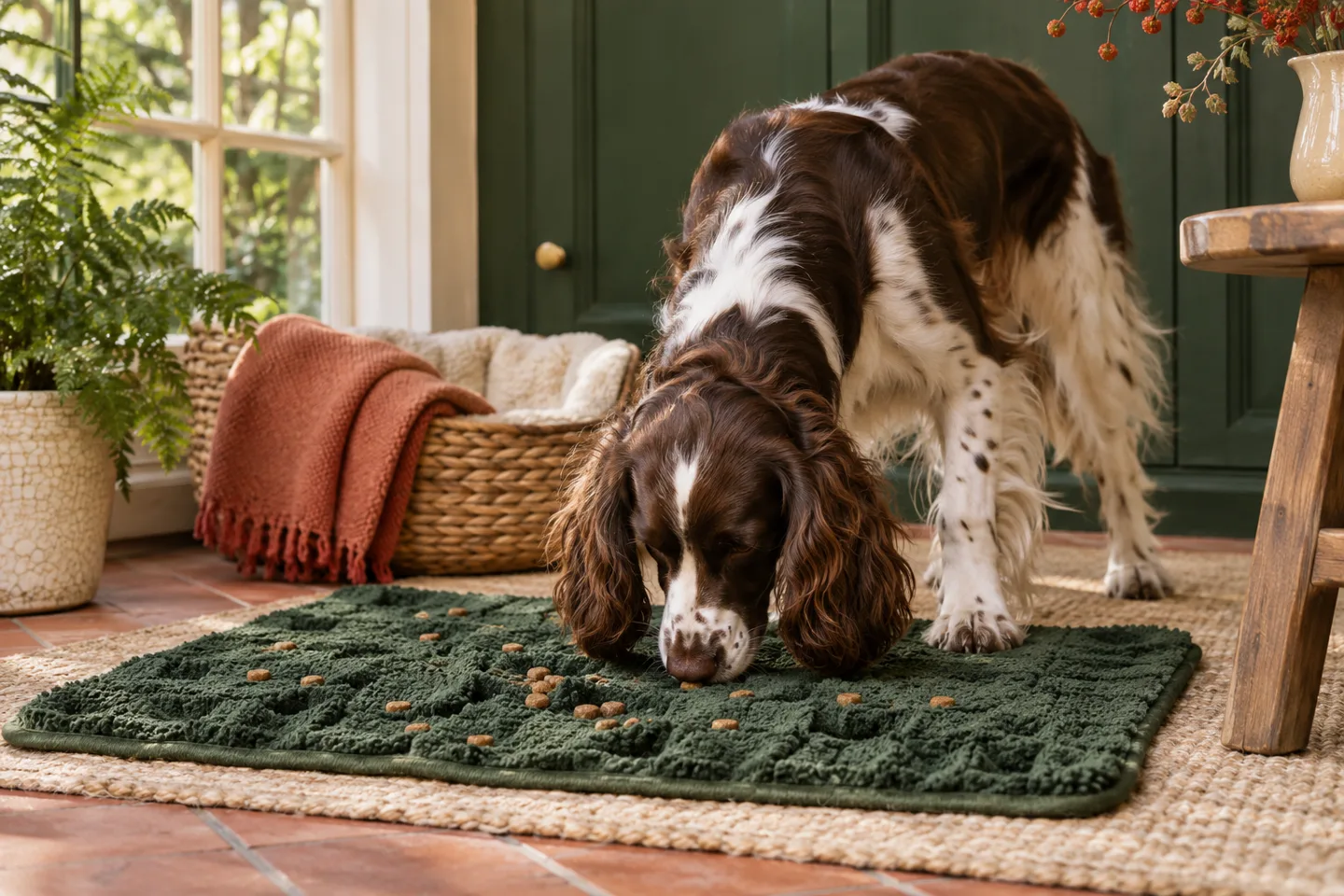
The easiest food search
In a clear, quiet area, place a few pieces from your dog’s normal food allowance in obvious locations. Let the dog find them without repeatedly pointing or adding pressure. Once that is easy, spread the pieces slightly farther apart. Keep the area separate from other pets if food competition is possible.
Avoid hidden food near electrical cables, unstable furniture, or objects the dog might swallow. Use a surface you can clean and food compatible with your dog’s dietary needs. If your dog becomes frantic, searches long after food is gone, or guards the area, stop and choose a simpler non-food activity while seeking individual advice if needed.
Make walks less rushed
Choose a safe stretch where you can allow pauses to investigate ordinary smells. A sniff-focused walk is not measured by distance alone. Watch weather, footing, traffic, and your dog’s physical comfort. Use appropriate leash equipment and avoid letting scent interest pull the dog into roads or unknown food.
On a busy morning, a short unhurried outing may be more manageable than adding a complicated indoor game. You can repeat a familiar route and still offer choices about where to pause. If your dog is recovering from injury or has exercise restrictions, ask your veterinarian which activities are suitable before changing the routine.
A five-minute planning card
- Choose one safe activity your dog already understands.
- Remove competing pets and obvious hazards.
- Start easier than you think necessary.
- Watch engagement and stop before frustration.
- Offer water and an undisturbed rest space afterward.
Turn training into a conversation
Practice a familiar cue in a quiet room, reward a comfortable response, and finish while the dog remains engaged. Touching a hand target or moving to a mat can become useful household skills. Keep sessions brief enough that you can watch the dog closely rather than multitasking through frustration.
If the dog walks away, pauses repeatedly, or cannot manage an easy task, lower the difficulty or take a break. Check distractions, fatigue, and whether the reward is useful to that dog. Avoid withholding necessities to create motivation. Enrichment should offer a manageable success, not a test the dog must pass to earn basic care.
Use toys with an exit plan
Choose toys for your dog’s size and chewing habits, inspect them for damage, and supervise unfamiliar items. A food toy that works for one dog may be unsafe for another. Stop using a toy if pieces loosen or the dog tries to swallow it. Cardboard and fabric games are poor choices for dogs who ingest those materials.
Keep a few suitable items in rotation rather than leaving everything out. Offer one in a calm area and put it away after the activity. For multi-dog homes, separate dogs when high-value food or chews are involved. Watch the whole interaction instead of assuming long-lasting means safe or relaxing.
A realistic plan for a crowded day
Before work, offer a toilet outing with a sniffing pause. During breakfast preparation, use a very easy supervised food search if your dog handles it calmly. At another point, practice one familiar cue and give the dog an undisturbed place to sleep. Arrange human care if the day leaves needs unmet.
At the end of the day, choose based on what you see. A dog who has had a stimulating outing may need rest, while another may welcome a gentle exploratory walk. Do not add escalating challenges just because a written plan says enrichment time. The dog’s behavior is more useful feedback than the number of activities completed.
Example: the puzzle that is too difficult
You put food in a new toy, but your dog paws at it, barks, and pushes it under the sofa. Instead of waiting for persistence to pay off, remove the toy safely and offer a few easy pieces of food on an open surface. Next time, present the toy with the food immediately accessible and watch whether the dog remains comfortable.
The goal is participation, not completing the manufacturer’s hardest setting. You can choose a different activity if the object never suits your dog. A gentle sniffing game may provide a better experience with less preparation and cleanup.
Keep the materials appropriate for your dog’s behavior. If they begin tearing and swallowing pieces, stop using that setup rather than simply supervising from farther away. This hypothetical example illustrates how to lower difficulty; it is not a recommendation to use a particular toy or a substitute for advice about a dog who guards food.
Troubleshoot without adding more difficulty
If a puzzle causes barking or frantic pawing, make the food easier to reach or remove the puzzle. If your dog repeatedly abandons an activity, try a different type rather than treating the response as stubbornness. If sudden disinterest appears with appetite or energy changes, seek veterinary advice instead of assuming boredom.
Keep a quick note about what your dog chose, how they behaved, and whether they settled afterward. That small record can help you repeat what works. For more ideas, consult the ASPCA’s enrichment resource linked below, and pair activities with the quiet-space principles in our calm-home guide.
Sources & further reading
Sources checked November 3, 2026. Practical examples are hypothetical planning scenarios. This article has not been individually reviewed by a veterinarian. Contact your veterinarian for health concerns or individual advice.