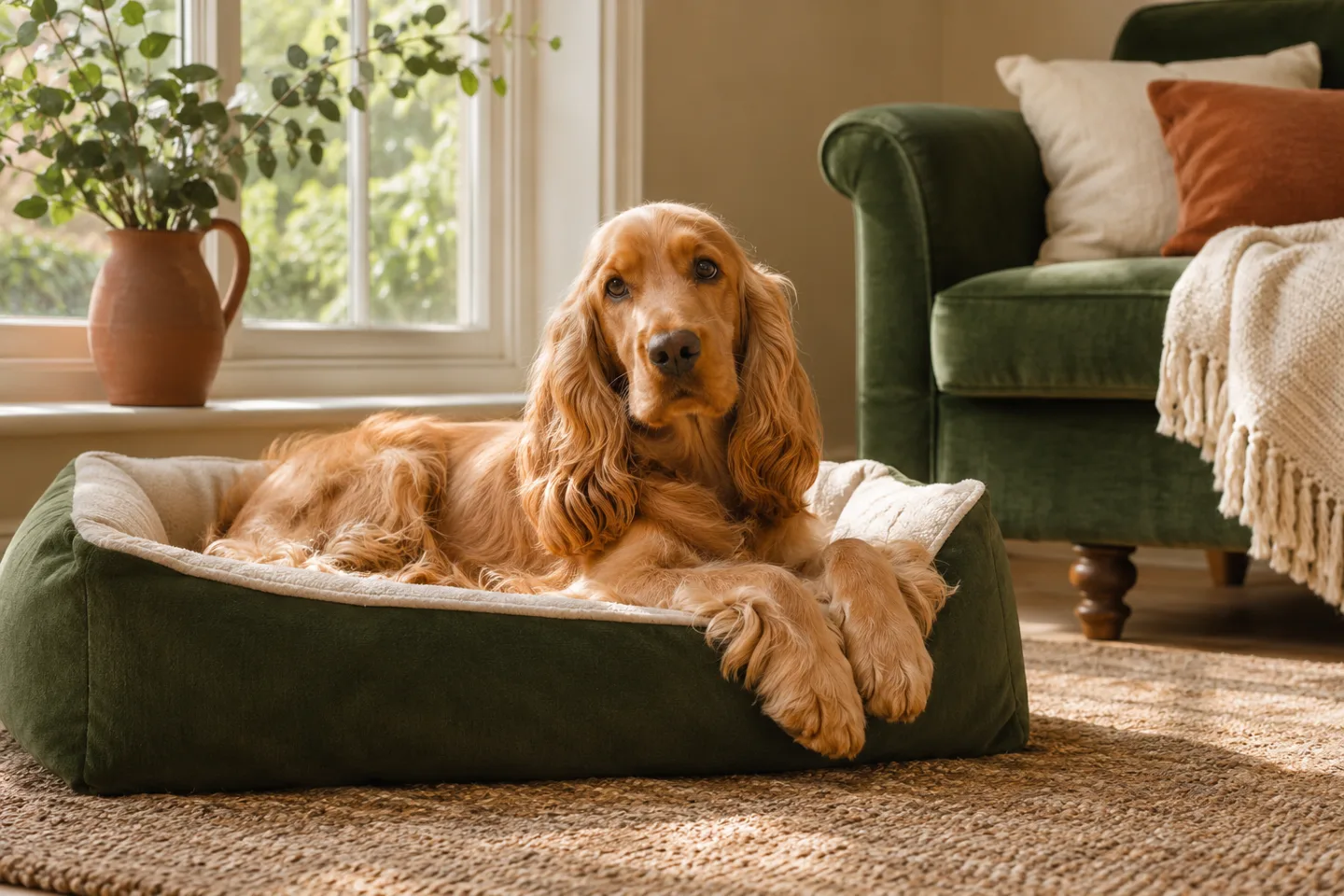
Find the quiet your dog can actually use
Watch where your dog chooses to lie down during an ordinary afternoon. Consider noise, direct sun, floor temperature, and passing traffic. A bed beside the front door may look convenient but leave a watchful dog responding to every delivery. Try a quieter location without cutting the dog off from the household completely.
Offer a choice where possible: a sheltered resting place and another spot closer to people. Some dogs enjoy a covered area; others prefer an open view. If you use a crate, introduce it positively and do not assume closing the door will create comfort. A dog’s behavior tells you whether the arrangement is working.
Protect rest through household agreements
Agree that people will let a resting dog sleep and will invite interaction rather than reaching into a bed. Children need active adult supervision around dogs, including familiar pets. Teach the household to give space when a dog moves away. A resting area works only if the people around it respect the boundary.
Use gates or room divisions when needed, while checking that the dog remains comfortable and has access to water. Separate pets during meals or valued chew time if competition is possible. Physical management can prevent rehearsed conflict, but repeated tension deserves individual help rather than an expectation that animals will sort it out.
A room-by-room comfort check
- Entry: secure doors and a clear route away from visitors.
- Living room: an undisturbed bed outside heavy foot traffic.
- Kitchen: accessible water and secured food, bins, and cleaners.
- Sleeping area: suitable temperature and predictable quiet.
- Shared spaces: safe separation when pets need distance.
Remove friction from ordinary movement
Look at the routes between the bed, water, door, and family seating. Slippery flooring, clutter, and narrow passages can make those routes uncomfortable. Secure suitable rugs so they do not slide, tidy cables, and keep small objects out of reach. Older dogs or dogs with pain may need veterinary advice about mobility changes.
Keep exits secure before opening the front door. Store medicines, cleaning products, and potentially harmful foods where the dog cannot access them. Choose bins and laundry storage with your dog’s habits in mind. Safety depends on what that individual investigates or swallows, rather than what looks tidy to a visitor.
Make arrivals less eventful
Prepare before the doorbell rings: clear the entry, have a suitable separation area available, and tell visitors how to greet the dog. Allow the dog to observe at a comfortable distance. Visitors should not follow a retreating dog or insist on petting to “make friends.” A quiet introduction can be more useful than enthusiastic attention.
If guests stay for several hours, plan breaks and a protected resting place. Watch whether the dog can settle or remains alert to every movement. For dogs who find visitors difficult, discuss a tailored plan with a qualified professional. Repeated exposure without appropriate support can leave the household stuck in the same stressful pattern.
Use predictable rhythms without rigid rules
Regular opportunities for food, toileting, suitable activity, and sleep make the day easier to manage. The timing can flex around real life, but the dog should not need to become frantic to obtain basic care. Notice whether the busiest household periods coincide with unmet needs and adjust in advance.
A simple evening sequence might be a toilet outing, food according to the dog’s normal schedule, quiet company, and rest. Keep play away from the resting space if it makes settling harder. If a dog cannot relax despite changes, consider discomfort, environmental stress, and professional support rather than adding endless exercise.
Decorate for the people and the dog
Choose washable textiles and furniture arrangements that leave useful floor space. Place framed art securely away from a bed or wagging tail, and check plants for pet safety before bringing them indoors. Keep fragile decorations and trailing cords out of reach. A dog-friendly room can still reflect the people who live there.
Create a small storage point for leashes, cleanup supplies, and suitable toys so routines are easy to repeat. Do not let a collection of dog accessories crowd the dog’s actual resting area. A restrained layout often works better than adding more objects marketed as calming products without knowing whether your dog likes them.
Example: the bed nobody uses
You choose a beautiful bed and place it beside a busy hallway. The dog repeatedly sleeps on an old rug in the spare room instead. Before buying another bed, test the location: move the existing bed to the quieter room and leave the dog free to choose. Check temperature, light, and whether family members keep approaching the resting place.
If the dog still prefers the floor, consider surface preference rather than assuming the bed needs more training. Offer safe alternatives and watch what the dog uses. Sudden avoidance of a formerly comfortable bed may also warrant a conversation with your veterinarian, especially if movement seems painful.
This example shows why a small observation can be more useful than a large purchase. Your design choice should follow the dog’s comfort as well as the room’s appearance. Keep the successful arrangement easy to maintain, with washable covers and clear access for everyday cleaning.
Change one thing and observe
Move the bed, reduce doorway traffic, or adjust the guest routine, then watch what changes. Does the dog choose the space, sleep more readily, or leave it repeatedly? Give yourself enough ordinary observations to distinguish a useful adjustment from a single unusual afternoon. Do not force the dog to remain in your preferred spot.
If restlessness starts suddenly or comes with pain, appetite changes, or unusual behavior, contact a veterinarian. Home design cannot diagnose or treat those problems. For daily activities that fit a calmer setting, see our enrichment guide; for a young dog, start with the puppy routine article.
Sources & further reading
Sources checked November 3, 2026. Practical examples are hypothetical planning scenarios. This article has not been individually reviewed by a veterinarian. Contact your veterinarian for health concerns or individual advice.